Peer Review Journal of Elderly and Self Esteem
Introduction
Self-esteem, which is the positivity of a person's global evaluations of the cocky [e.g., Baumeister et al. (1)], is one of the most famous indicators of mental health. To maintain good mental health, it is of import to have a positive view of the self to some extent.
The boilerplate level of cocky-esteem changes across the life span along with changes in one's capacities (east.m., social, cognitive) and surrounding environments (e.g., social, economic). Uncovering the developmental trajectory of self-esteem across the life span is important at least for 2 reasons. Outset, it is crucial to reveal the effects of basic demographic variable on cocky-esteem. Age is one of the well-nigh oftentimes examined demographic variables. Thus, how age influences self-esteem should exist investigated. Furthermore, when researchers are interested in the effects of other variables (e.thou., socio-economic condition, interpersonal relationships) on self-esteem, they should command for basic demographic variables that might confound these effects (due east.g., age, gender). To statistically control for the event of age, it is imperative to know in advance how age is associated with self-esteem. Second, investigating the developmental blueprint across the lifetime contributes to understanding how self-esteem is formed, maintained, and influenced by changes in 1's capacities and surrounding environments. For example, finding two periods when self-esteem declines tin estimate that a consequent gene mutual to the ii periods might decrease self-esteem.
Revealing the developmental trajectory of self-esteem is besides important for public health at least for 2 reasons. Such cognition contributes to promoting public mental health by providing empirical evidence about the developmental pattern of self-esteem. Start, knowing when self-evaluation tends to go negative over the life bridge facilitate effective prevention and provision. For example, parents and teachers can pay more attention to and provide more resource to people in the periods at higher run a risk. Second, knowing the period when self-evaluation is at loftier take a chance for turning negative tin facilitate effective interventions and responses. Interventions and responses that are necessary depend on age categories (due east.g., adolescence, old age). Moreover, people that are in the periods of lower cocky-esteem might feel relieved if they sympathise that they are non special and it is rather natural to accept relatively depression self-esteem during specific developmental stages.
Previous research peculiarly in European American cultures has provided empirical evidence near the developmental trajectory of self-esteem over the life form. However, is this developmental pattern of cocky-esteem consequent across cultures?
Age Differences in Cocky-Esteem in European American Cultures
A large amount of inquiry has investigated the developmental trajectory of self-esteem in European American cultures (especially in the U.S.; for reviews, come across Orth and Robins (ii); Robins and Trzensniewski (3). Robins et al. (4) investigated historic period differences in cocky-esteem from a wide range of population aged 9 to 90 years old in the U.South. They institute that self-esteem is high in childhood, low in adolescence, but then continues to become higher in machismo. Then, cocky-esteem peaks around the mid-60s, and shows a drop afterward. Moreover, Orth et al. (v) explored the developmental trajectory of self-esteem from young adults anile 25 to the elderly aged 104 past analyzing longitudinal data in the U.S. They showed that self-esteem increases from young adulthood through middle age, but then decreases from effectually the age of 60. In addition, Orth et al. (6) investigated the life-span evolution of self-esteem from adolescents anile xvi to the elderly anile 97 by examining other longitudinal data in the U.S. They demonstrated that cocky-esteem rises from adolescence to center machismo, peaks at nearly age 50, and declines in old age. This blueprint of developmental change has been plant non but in the U.South., simply likewise in Federal republic of germany. Orth et al. (seven) examined the development of self-esteem from adolescents anile xiv to the elderly aged 89 by analyzing a longitudinal study. Results indicated that self-esteem increases from boyhood to eye adulthood, reaches a pinnacle at nearly age 60 years, and decreases in old age in Germany.
Studies have shown that self-esteem reaches a height in one'southward 50s or 60s, and then sharply drops in old age (4–vii). This is a characteristic change, so it is important to reveal about when self-esteem peaks beyond the life span. This drop is idea to occur mainly for two reasons [due east.yard., Robins et al. (four); Robins and Tresniewski (iii)]. The first is the loss of things that are important to one's evaluation of oneself. These include the loss of socioeconomic positions or roles due to retirement, loss of close others (e.yard., spouse, romantic partner), and a reduction in one's abilities (eastward.g., physical, cognitive). The second is a alter in attitudes toward oneself. The elderly come up to have their limitations and faults, leading them to accept more than apprehensive, modest, and balanced perspectives toward themselves.
Age Differences in Self-Esteem in Nippon
Previous research has shown that self-esteem is profoundly affected past culture [e.g., Heine et al. (eight); Schmitt and Allik (9)], leading to the possibility that the developmental trajectory of cocky-esteem may differ across cultures. Thus, it is important to investigate the developmental modify in self-esteem in cultures other than America and Europe1.
Prior enquiry examined age differences in self-esteem from elementary school students aged ten to the elderly in their 60s past analyzing cantankerous-sectional data from a large, representative and diverse sample in Japan (12). It showed that levels of self-esteem were loftier for unproblematic school students, low amidst middle and loftier school students, but so gradually continued to become higher among adults, consistent with the pattern obtained in European American cultures (2, iii). Moreover, previous enquiry has indicated the same blueprint of age differences in self-esteem from heart school students to the elderly in their 60s by analyzing another contained and large-sample survey (13).
However, previous research had two limitations. Starting time, information technology did not directly examine age differences in global self-esteem in Japan. Prior research investigated age differences in cocky-esteem by focusing on one component of self-esteem: self-liking ["our melancholia judgment of ourselves, our approving or disapproval of ourselves, in line with internalized social values" ((14), p. 325); also encounter, Tafarodi and Milne (15); Tafarodi and Swann (16)]. It has been shown that self-esteem consists of self-liking and self-competence ("the overall sense of oneself as capable, effective, and in command"; (14), p. 325), which are strongly correlated with each other and construct self-esteem. Thus, it is strongly predicted that age differences in self-esteem would be consistent with those in self-liking. However, this has non been examined empirically. Although we do not accept stiff evidence, it is possible that patterns of age differences in cocky-competence are different from patterns of age differences in self-liking. To reveal the developmental trajectory of global self-esteem, it is desirable to directly investigate age differences in self-esteem by capturing both of its aspects simultaneously.
2d, previous research did not sufficiently investigate age differences in self-esteem in the elderly over the age of 70, leaving the developmental trajectory of self-esteem after the historic period of 70 in Japan unclear. Previous research in European American cultures has indicated that the average level of self-esteem drops sharply in the elderly period (2, three). To capture the whole motion-picture show of the developmental trajectory of self-esteem in Japan, it is necessary to investigate whether this sharp driblet is besides found among the elderly in Japan. Many studies take shown that people in Japan have more humble, modest and balanced attitudes toward themselves compared to people in European American cultures [e.one thousand., Heine et al. (8); Heine and Hamamura (17)]. Given that the sharp turn down in self-esteem observed in European American cultures may be caused past increases in such attitudes in old age, it is possible that a refuse may be absent-minded or less sharp in Japanese older adults. Indeed, 1 prior study did not detect a drop in self-liking between the ages of 50 and 69, which implies that a decline may exist absent or establish later in old age in Japan (18). Thus, the developmental blueprint of cocky-esteem may differ across cultures, which should be investigated empirically.
Present Inquiry
To overcome the get-go limitation of previous enquiry, we measured global self-esteem by administering the Rosenberg Self-Esteem Scale [RSES; (xi)]. This scale is i of the most frequently used measures of global cocky-esteem. We predicted that the developmental trajectory of self-esteem would be consistent with that of self-liking: levels of cocky-esteem were low in adolescence, but and then continued to become higher among adults. Here, we also empirically examined whether self-competence and self-liking were closely related to each other. We expected that self-competence and cocky-liking would exist highly correlated with each other, and the developmental pattern of self-competence would exist consistent with that of cocky-liking. To overcome the second limitation, nosotros collected data roofing a more diverse sample that included the elderly over the historic period of lxx. We predicted that a drib of cocky-esteem would be absent-minded or less sharp in Japanese older adults. In sum, in the current research, nosotros investigated age differences in global self-esteem among a broader range of the population in Nippon past using the RSES.
Prior enquiry has shown that the pattern of age differences in self-esteem is similar betwixt males and females in the U.S. [for a review see, Orth and Robins (two)] and Germany (vii). Although the patterns are consequent betwixt gender, in some cases, pocket-sized differences were found with females showing larger age differences than males (four, v). This was also the case in Japan (19). Thus, we also investigated whether age differences in self-esteem are moderated by gender. We predicted an absenteeism of the moderating effect of gender, simply if at that place were whatsoever differences, they would be modest differences, which would be larger in females than in males.
Method
We analyzed half dozen contained web surveys administered to a large and diverse sample in Nihon.
Survey
Each survey was conducted independently in 2009, 2011, 2012, 2013, 2017, and 2018. The data in 2009 was collected by Kyoto Academy Global COE Program (Revitalizing Pedagogy for Dynamic Hearts and Minds). The data for this secondary analysis, "International Comparative Inquiry on Sense of Happiness, 2009–2011" was provided by the Social Science Japan Data Archive (Eye for Social Research and Data Archives, Constitute of Social Science, The University of Tokyo). The data from 2011, 2012, 2013, 2017, and 2018 were nerveless by us [e.yard., Ogihara et al. (20)]. We recruited participants from every prefecture in Japan on the internet via research firms. The inquiry firms had their ain big pools of participants. In each survey, a designated number of participants were assigned to each cell by age category and gender. Participants were rewarded later on answering the survey. The summary of each survey is shown in Table 1.
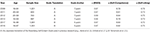
Table i. Summary of surveys.
Sample sizes by gender and generation are indicated in Table 2. The sample sizes ranged from 763 to i,331 and the full sample size was six,113.
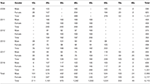
Tabular array two. Sample sizes by gender and generation.
Self-Esteem
The Rosenberg Self-Esteem Scale, a 10-item mensurate of global self-esteem [due east.thousand., "I feel that I have a number of good qualities," "On the whole, I am satisfied with myself."; (xi)], was administered.
In the 2017 and 2018 surveys, the Japanese translation of the RSES from Yamamoto et al. (22) was used (v-point calibration; 1: Non applicable−5: Applicable). In the other surveys, a different translation of the RSES that has been used in previous enquiry [e.g., Heine et al. (eight); Uchida et al. (21)] was administered (vii-signal scale; 1: Strongly disagree−vii: Strongly concur)2. Reliabilities of the RSES in the six surveys were sufficiently high (αs > 0.86; Table 1).
The average scores for self-competence (e.g., "I feel that I have a number of good qualities"; SC13) and self-liking (e.thou., "On the whole, I am satisfied with myself."; SL14) were calculated by averaging the five items of the RSES, as was washed in previous research (fifteen). The reliabilities for self-competence (αs > 0.77; Table 1) and self-liking (αs > 0.69; Table 1) were sufficiently high.
Analysis
First, we confirmed whether the Self-Esteem Scale measured the same concepts between genders and age-groups (i.e., measurement invariance/equivalence). We divided the participants into subgroups and conducted multi-group confirmatory gene assay (CFA). For this analysis, we split the participants into 3 age groups: younger adults (10s5, 20s, 30s), eye-aged adults (40s, 50s), and older adults (60s, 70s, 80s)6. Following previous inquiry (14, 15), we fabricated a two-factor model in which self-competence (measured by five items) and self-liking (measured by 5 items) constituted self-esteem (Figure 1)seven. For the multi-group CFA, nosotros used IBM SPSS Amos (ver. 26).
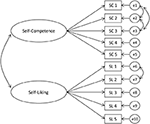
Figure 1. A two-factor model in which self-competence and self-liking constitute self-esteem.
Then, to check whether self-competence and cocky-liking are closely related to each other, nosotros calculated their correlation coefficients at the individual level and at the age level.
Next, we conducted hierarchical multiple linear regression analyses on each dataset for predicting self-esteem from age and gender8. The contained variables nosotros entered in Footstep 1 were gender (male = 0, female person = one), the age, and their interaction (age × gender), and in Step ii, the age squared and its interaction with gender (age2 × gender), and in Step three the historic period cubed and its interaction with gender (age3 × gender). If the interaction upshot was pregnant, nosotros conducted hierarchical multiple linear regression analyses separately past gender for predicting self-esteem from the age (Step 1), the age squared (Step ii), and the historic period cubed (Step 3). In these analyses, nosotros centered each historic period variable and weighted sample sizes to estimate the developmental trajectory of self-esteem more precisely.
Finally, we looked at whether these developmental patterns were found in each component (i.e., self-competence and self-liking) past conducting a series of hierarchical multiple linear regression analyses. The dependent variable was the average score for each component (self-competence or cocky-liking; non global cocky-esteem). In Step ane, the contained variables were age, the age-squared, and the type of component (categorical variable: self-competence = 0, self-liking = ane). In Step 2, the interaction terms were added (i.e., the age × the component, the age-squared × the component). We used IBM SPSS (ver. 25) for the analyses.
Results
Measurement Invariance
Nosotros tested measurement invariance in two steps. First, we conducted a confirmatory factor analysis for each subgroup separately (unmarried-grouping CFA) in each dataset. Second, nosotros conducted confirmatory cistron analysis by including the subgroups (multi-group CFA) at four successive levels in each dataset. These results are summarized in Table 3.
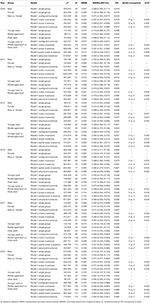
Tabular array 3. Fit indices for the confirmatory factor analyses.
Single-Group CFA
The model fits were adequate to adequate in all the datasets (Tabular array iii), showing that the two-factor model successfully described the structure of self-esteem in each subgroup.
Multi-Group CFA
To evaluate the fitness of the model at four hierarchical levels, nosotros used changes in CFI (ΔCFI) index. Specifically, if ΔCFI was smaller than 0.010, the successive model that constrained more equality was accepted (27). Nosotros did not use Δχii for this evaluation because χtwo is sensitive to sample size (27).
Outset, configural invariance was tested. Configural invariance indicates that structure of latent factors and observed variables (e.g., number of latent factors, aforementioned associations between each factor and observed items) are consistent across groups. Second, metric invariance (weak factorial invariance) was investigated. Metric invariance means that factor loadings are comparable across groups, indicating that participants in different groups respond to each item in a similar manner. We constrained each gene loading to exist equal beyond groups. 3rd, scalar invariance (strong factorial invariance) was tested. Scalar invariance indicates that gene loadings and intercepts of items are comparable across groups, showing that latent factor scores lead to observed scores in the same style beyond groups. We constrained each cistron loading and intercept of each observed variable to exist equal across groups. Finally, structural invariance (factor variance/covariance invariance) was examined. Structural invariance ways that latent factors are distributed and associated similarly across groups. We constrained the variance of each gene and covariance of the two factors across groups.
Regarding gender, five out of the 6 datasets (2009, 2011, 2012, 2017, 2018 datasets) demonstrated scalar and structural invariance, and one (2013 dataset) showed partial scalar9 and structural invariance. In the 2013 dataset, ΔCFI between the metric invariance model and the scalar invariance model was 0.011, which was slightly above the conventional criterion of 0.010 (27). This criterion is non a golden rule, and excluding just ane constraint of item intercept cleared the criterion (fractional scalar invariance). In all of the datasets, at least partial scalar and structural invariance were supported.
Regarding age-group, i out of the 6 datasets (2011 dataset) showed scalar and structural invariance, four (2009, 2012, 2013, 2018 datasets) showed fractional scalarten and structural invariance, one (2017 dataset) showed metric and factorial invarianceeleven. In the 2017 dataset, ΔCFI between the metric invariance model and the fractional scalar invariance model was 0.012, which was slightly above the conventional criterion of 0.010 (27). Overall, in the well-nigh datasets, at least partial scalar and structural invariance were supported.
The Human relationship Between Self-Competence and Self-Liking
Nosotros calculated correlation coefficients between self-competence and self-liking at the private level and at the age level in each of the six studies (Table 4). At the individual level, they were highly correlated for the total population (rs > 0.72, ps < 0.001), for males (rs > 0.68, ps < 0.001), and for females (rs > 0.72, ps < 0.001). These potent relationships were too found within sub-populations (each age grouping for both males and females). Relatively lower coefficients for some sub-populations (r = 0.42 for males in their 70s in 2018, r = 0.27 for females in their teens in 2018) were due to the small sample sizes (n = 44 for males in their 70s in 2018, northward = 5 for females in their teens in 2018; encounter Table ii). Similarly, at the historic period level, the correlations were large both for males (rs > 0.71, ps < 0.001) and females (rsouth > 0.79, ps < 0.001).
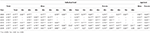
Table 4. Correlation coefficients betwixt self-competence and self-liking.
Historic period Differences in Global Self-Esteem
A summary of the regression models predicting self-esteem from age and gender is indicated in Table 5.
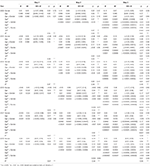
Tabular array 5. Summary of regression models predicting self-esteem from age and gender.
2009
The model in Footstep one was pregnant, and the addition of the age squared and its interaction with gender significantly increased the coefficient of determination (Step 2; Table 5). The add-on of the age cubed and its interaction with gender did not significantly increment the coefficient of determination (Stride 3). Thus, the quadratic model (Footstep two) was accustomed. We conducted a consistent assay separately past gender because the interaction between the age squared and gender was significant.
Male
The age significantly predicted self-esteem (Step one), and the addition of the age squared term significantly increased the coefficient of determination (Step 2; Table 6). The add-on of the age cubed term did non significantly increase the coefficient of determination (Step iii). Thus, the quadratic model (Pace 2) was accepted (Figure 2). Self-esteem showed a slight downwards tendency from the teens to the mid-30s (the lowest predicted score was the age of 3212), only and so it continued to become higher to the 80s13.
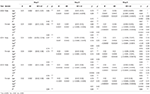
Table half dozen. Summary of regression models predicting self-esteem from age by gender (in the 2009, 2011, and 2013 surveys).
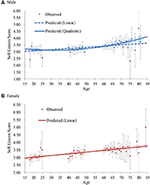
Figure 2. Average and predicted self-esteem scores across ages in Nippon (2009 survey). Notation. Error bars stand for 95% confidence intervals.
Female
The model in Step 1 was significant, and the addition of the age squared term did not significantly increment the coefficient of determination (Step 2; Table 6). Thus, the linear model (Footstep 1) was accustomed (Figure 2). Self-esteem continued to get college from the teens to the 80s (d = 0.97fourteen)fifteen.
2011
The model in Step ane was significant, and the addition of the age squared and its interaction with gender did not significantly increase the coefficient of conclusion (Step two; Table 5). Thus, the linear model (Pace ane) was accepted. We conducted a consistent analysis separately past gender because the interaction betwixt the age and gender was significant.
Male
The model in Pace 1 was pregnant, and the addition of the age squared term did not significantly increase the coefficient of determination (Footstep 2; Table 6). Thus, the linear model (Step i) was accepted (Effigy iii). Cocky-esteem continued to become higher from the 20s to the 50s (d = 0.51).
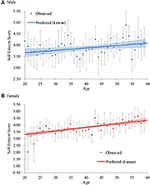
Figure three. Average and predicted self-esteem scores across ages in Japan (2011 survey). Note. Error confined stand for 95% conviction intervals.
Female
The model in Step one was meaning, and the addition of the age squared term did not significantly increase the coefficient of determination (Step two; Table 6). Thus, the linear model (Pace ane) was accepted (Figure 3). Cocky-esteem continued to get higher from the 20s to the 50s (d = 1.05). The gradient for females (B = 0.03, p < 0.001) was larger than that for males (B = 0.01, p < 0.05).
2012
The model in Step ane was significant, and the improver of the age squared and its interaction with gender did not significantly increase the coefficient of conclusion (Step ii; Table 5). Thus, the linear model (Pace 1) was accepted. The interaction betwixt the age and gender was not significant, showing that self-esteem continued to become higher from the 20s to the 50s both for males and females (Figure 4)16.
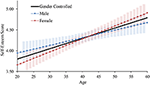
Effigy iv. Predicted self-esteem scores across ages in Japan (2012 survey). Note. Fault confined stand for 95% confidence intervals.
2013
The model in Step 1 was significant, and the addition of the historic period squared and its interaction with gender did not significantly increase the coefficient of conclusion (Pace 2; Table 5). Thus, the linear model (Step 1) was accepted. We conducted a consistent assay separately past gender because the interaction between the age and gender was significant.
Male person
The model in Step 1 was pregnant, and the addition of the age squared term did not significantly increase the coefficient of decision (Stride ii; Table 6). Thus, the linear model (Step i) was accustomed (Figure five). Self-esteem connected to go higher from the teens to the 60s (d = 1.00).
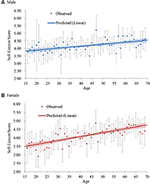
Figure 5. Average and predicted cocky-esteem scores across ages in Nihon (2013 survey). Annotation. Fault bars correspond 95% confidence intervals.
Female
The model in Footstep 1 was pregnant, and the addition of the historic period squared term did not significantly increase the coefficient of determination (Step two; Table 6). Thus, the linear model (Stride i) was accepted (Figure 5). Self-esteem continued to become higher from the teens to the 60s (d = i.42). The slope for females (B = 0.02, p < 0.001) was larger than that for males (B = 0.01, p < 0.001).
2017
The model in Step one was significant, and the addition of the historic period squared and its interaction with gender significantly increased the coefficient of determination (Step 2; Table five). The improver of the age cubed and its interaction with gender did non significantly increase the coefficient of determination (Step iii). Thus, the quadratic model (Step two) was accepted. The interaction between the age squared and gender was not significant. Self-esteem continued to go higher from the 20s to the 50s both for males and females (Effigy 6)17.
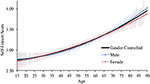
Figure 6. Predicted self-esteem scores across ages in Japan (2017 survey). Fault bars represent 95% confidence intervals.
2018
The model in Step one was significant, and the addition of the age squared and its interaction with gender did not significantly increase the coefficient of determination (Step 2; Tabular array 5). Thus, the linear model (Pace ane) was accustomed. The interaction between the age and gender was non meaning, showing that self-esteem continued to go college from the 20s to the 50s both for males and females (Effigy seven)18.
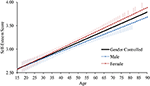
Figure seven. Predicted cocky-esteem scores beyond ages in Nippon (2018 survey). Note. Fault bars represent 95% confidence intervals.
Age Differences in Self-Competence and Self-Liking (The 2 Components of Global Self-Esteem)
The results of the hierarchical multiple regression analyses are summarized in Table vii. Except for females in 2009, the additions of their interaction terms did not significantly increase the coefficient of determination. Neither of the interaction terms significantly predicted the scores. These results consistently advise that the developmental patterns for cocky-competence and self-liking were not different.
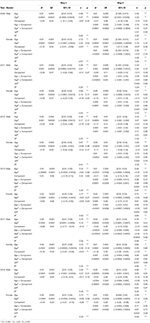
Table seven. Hierarchical multiple linear regression predicting components of cocky-esteem from historic period, component blazon and their interactions.
For females in 2009, Footstep ii significantly increased the coefficient of determination. The interaction term between historic period and the component significantly predicted the score. Thus, nosotros conducted the same hierarchical multiple regression analyses on each component as we did for the global self-esteem (Table 8). Although in both components age significantly explained the scores, the slope of the increase was higher for self-liking (B = 0.02, p < 0.001) than for self-competence (B = 0.01, p < 0.001; Figure 8). Yet, both patterns consistently indicated a continuous upward trend in self-esteem.
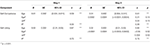
Tabular array 8. Regression models predicting each sub-component of self-esteem from age for females in the 2009 study.
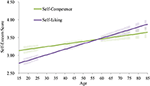
Figure 8. Average and predicted cocky-esteem scores past component across ages amid females in Japan (2009 survey). Note. Error bars correspond 95% conviction intervals.
Due to the consistent relationship between self-competence and cocky-liking, the age patterns for each component were same equally those for global self-esteem. Specifically, the quadratic increases were found amongst males in 2009 and both genders in 2017, and the linear increases were establish in the other subgroups.
Discussion
Summary of the Results and Implications
Nosotros investigated age differences in self-esteem in Nihon from adolescents aged 16 to the elderly aged 88 by using the RSES. Previous cross-exclusive research has investigated historic period differences in self-esteem in Nippon (12, 13, 17). Still, information technology had two limitations: (one) it did not directly examine age differences in global cocky-esteem and (2) it did non investigate cocky-esteem amidst the elderly over the historic period of 70. These limitations had to be overcome to fully understand the developmental trajectory in self-esteem beyond the life bridge in Nippon. Therefore, nosotros examined age differences in cocky-esteem by conducting the RSES on more diverse sample that included the elderly over the age of seventy.
First, as predicted, we plant a pattern to the developmental trajectory of global self-esteem that is consistent with previous research on self-liking (12, 13, xviii). Nosotros had predicted that the developmental blueprint of self-esteem would be consequent with that of cocky-liking, but we had not had empirical evidence to support it. In this research, nosotros empirically confirmed that cocky-competence and cocky-liking are closely associated with each other and have a consistent developmental pattern in Japan. Specifically, across the vi cross-sectional surveys, the average level of self-esteem was depression in adolescence, only and so gradually continued to get higher from young adulthood to belatedly machismo. This trajectory was consistent with findings in previous research in European American cultures (2, 3).
Second, as expected, analyses showed that the boilerplate level of cocky-esteem connected to signal an upwardly trend across the age of 50 in Nihon. All of the 6 independent cross-sectional datasets consistently showed that self-esteem continued to go higher from machismo to sometime age both for males and females. This finding was inconsistent with previous research that showed a drib in cocky-esteem over the age of 50 in European American cultures (2, 3). With sometime age comes a more humble, modest, and counterbalanced perspective toward oneself, which leads to a refuse in self-esteem in old age in European American cultures [e.g., Robins et al. (4); Robins and Tresniewski (three)]. Previous inquiry has indicated that, compared to people in European American cultures, people in Japan accept more humble and balanced attitudes toward themselves, not just in onetime historic period [east.m., Heine et al. (8); Heine and Hamamura (17)], which may account for the absence of a driblet of self-esteem among the Japanese people over the age of fifty. Thus, this research demonstrates that different developmental patterns tin can emerge in different social/cultural environments.
Ane may wonder whether the absenteeism of a sharp drop in cocky-esteem in Nihon is caused by the fact that participants answered the questionnaire on the net. Elderly people who use the internet may differ from the elderly population in full general (e.yard., they may be wealthier and healthier). However, this was besides the case in previous research that observed a articulate drop in self-esteem among the elderly in the U.S. (eastward.one thousand., (iv)). Thus, this caption is insufficient to account for the cultural departure in the developmental trajectory of self-esteem among the elderly. Still, it is desirable to collect more representative data especially from the elderly and see if the result is consistent with the present research.
Three datasets showed that gender differences in the pattern of age differences were absent. The other three datasets indicated that in that location were slight differences betwixt gender: slopes for females were a niggling larger than those for males. In sum, the pattern of historic period differences in self-esteem was like betwixt gender, if whatsoever small differences. These results were consistent with previous research (ii, vii, 19).
We too confirmed the measurement invariance of the Rosenberg's Self-Esteem Scale (11) across gender and age-groups in Nippon. Regarding gender, five out of the vi datasets demonstrated scalar and structural invariance, and one showed partial scalar and structural invariance. Thus, in all of the datasets, at least fractional scalar and structural invariance were supported. Regarding historic period-grouping, one out of the six datasets showed scalar and structural invariance, four showed partial scalar and structural invariance, and ane showed metric and structural invariance. Overall, in the most datasets, at least partial scalar and structural invariance were supported. These results showed that the model structure and the adequacy of the measure out were invariant across gender and historic period-groups.
Limitations and Future Directions
This research investigated age differences in self-esteem from adolescents in their teens to the elderly in their 80s by analyzing half-dozen cross-sectional datasets from a large and various sample. But, in cross-sectional data, historic period differences involve cohort differences. This inquiry is a reasonable first step to understand the developmental trajectory of self-esteem across the life span in Japan. In fact, the absenteeism of a drib in self-esteem in Nippon might exist caused past the cohort upshot. Specifically, older cohorts might have higher self-esteem and younger cohorts might have lower self-esteem (23–26), which might obscure the driblet of self-esteem in Japan. Thus, in the future, it is necessary to clarify longitudinal data which can distinguish betwixt age differences and cohort differences.
Another limitation is that, although the sample sizes were relatively large for teens (n = 211), adults (n 20s = 1,161, due north 30s = 970, northward 40s = 1,382, n 50s = one,056), and the elderly in their 60s (due north = 1,031) and 70s (n = 253), the sample size for the elderly in their 80s was small (due north = 49). Thus, the results for this historic period group may be unreliable. It would be desirable to examine this bespeak further past collecting more representative information.
Data Availability Statement
The datasets presented in this commodity are not readily available because participants were not asked to provide permission to disembalm individual data at the time of data collection. Requests to admission the minimal datasets (aggregate level) should exist directed to Yuji Ogihara (yogihara@rs.tus.ac.jp).
Ethics Statement
This study was carried out in accordance with the recommendations of the Declaration of Helsinki and the Japanese Psychological Association with written informed consent from all subjects. Ethical approval was not required for this report in accordance with the local legislation and institutional requirements. This study asked participants to reply one of the well-nigh oftentimes used questionnaires (Rosenberg Self-Esteem Scale) and this questionnaire did non include any items that may harm participants. Thus, the protocol was not submitted to an ethics commission. Both individual researchers in charge of each survey and their respective inquiry firms confirmed that all surveys were without whatever upstanding concerns. All subjects gave written informed consent via the online questionnaire in accordance with the Declaration of Helsinki.
Author Contributions
YO contributed formulation and design of the study, performed the statistical assay, and wrote the outset draft of the manuscript. TK nerveless the information and provided the critical comments on the manuscript. All authors contributed to manuscript revision and approved the last manuscript.
Funding
This work was supported by the Japanese Group Dynamics Association.
Conflict of Involvement
The authors declare that the research was conducted in the absence of any commercial or fiscal relationships that could be construed as a potential conflict of interest.
The reviewer ST declared a shared affiliation, with no collaboration, with the authors to the handling editor at the time of review.
Acknowledgments
We thank Pamela Taylor for her helpful comments on our previous versions of the manuscript.
Supplementary Material
The Supplementary Fabric for this commodity can be found online at: https://www.frontiersin.org/articles/ten.3389/fpubh.2020.00132/full#supplementary-cloth
Footnotes
one. ^Bleidorn et al. (10) examined cultural variation in age and gender differences in cocky-esteem across 48 nations including Nippon. However, with regards to cultural differences in the developmental trajectory of self-esteem, it had at least iii limitations. First, it investigated age differences in self-esteem between the ages of 16 and 45, leaving it unclear how average levels of cocky-esteem change later early on middle age. 2d, it indicated that self-esteem in females showed an upward trend from early adolescence to middle adulthood in Japan whereas self-esteem in males showed a down trend during this flow. Among 48 nations, this historic period pattern in males was found only in Japan, but the reason for this was non discussed. Third, every bit mentioned equally a limitation by the authors, it used only one detail "I run across myself every bit someone who has loftier self-esteem" (a 5-point scale ranging from one: disagree strongly to 5: agree strongly) instead of fairly constituted scale [eastward.g., Rosenberg Self-Esteem Scale; Rosenberg (eleven)]. Although it was stated that the validity and reliability had been confirmed in the U.S. (although the item and its anchors differed from the original research), it is unclear whether the validity and reliability were confirmed in other nations including Japan. The word "cocky-esteem" is abstruse and conceptual, and then it may be interpreted differently across cultures and/or within each culture. This may have contributed to the exceptional design found in Japan (i.e., the continuous downwardly trend in males and the continuous upward trend in females).
2. ^The translations differed betwixt years is because these studies were conducted as an omnibus survey with other researchers.
iii. ^The other four items assessing cocky-competence were "I am able to practise things equally well as most other people." (SC2), "I feel that I'chiliad a person of worth, at least on an equal airplane with others." (SC3), "I feel I practise not take much to be proud of." (SC4), and "All in all, I am inclined to feel that I am a failure." (SC5).
4. ^The other iv items assessing self-liking were "I accept a positive attitude toward myself." (SL2), "I certainly experience useless at times." (SL3), "At times I remember I am no good at all." (SL4), and "I wish I could have more respect for myself." (SL5).
5. ^Although teenagers are normally non regarded as younger adults, because the size of this sample was relatively small-scale, teenagers were conventionally included in the younger adults group in this analysis.
6. ^Because the datasets in 2011 and 2012 did not include participants aged over threescore years, we divide the participants into two age groups: younger adults (20s, 30s) and middle-aged adults (40s, 50s).
7. ^Because the covariances between error terms of SC1, SC2, SC3, and error terms of SL1 and SL2 were large, we included them in the model (Model 1). These high associations may be due to the nature of the items: the items were affirmative, and the remaining (i.e., SC4, SC5, SL3, SL4, SL5) were reversed items. Even if we did not include these covariances in the model, the patterns of the results of multi-group CFA were consistent.
viii. ^We did not examine whether the developmental design of self-esteem (e.g., the shape of changes, the magnitude of the slope) differed among the six datasets. Naturally, the developmental pattern is different because the time periods covered in the surveys are significantly different (Tables 1, 2). Moreover, previous enquiry has shown that the boilerplate levels of cocky-esteem decreased over time in Japan [(23–25); for a review of historical changes in self-esteem in Japan see Ogihara (26)]. Thus, the self-esteem score should not be simply averaged across the surveys that were conducted over nine years. Even if the self-esteem scores are z-transformed in each survey, the periods covered past the surveys are significantly unlike, and they should not be aggregated.
9. ^In the partial scalar invariance model, detail intercepts that were constrained did not include SL5 (i.e., excluding the constraint of SL5's item intercept from the total scalar model).
10. ^In the fractional scalar invariance models, item intercepts that were constrained were as follows. 2009: SC1, SC2, SC3, SL2; 2012: other than SL3; 2013: SC1, SC3, SL2, SL5; 2017: SC4, SL5; 2018: SC2, SL5.
11. ^The reason for these differences in the levels of measurement invariance could be due to differences in factors such as total sample sizes, proportions of age-group sample size, and type of scale translations. However, we do not have sufficient data to empirically detect the reason(s). Thus, in the future, it would be important to investigate the possibility that people across a broad range of age might respond to RSES items differently.
12. ^The lowest predicted score was at the age of 32 when raw data were unavailable. Thus, issue sizes were not calculated.
xiii. ^We describe developmental patterns of cocky-esteem based on historic period differences in self-esteem. Nonetheless, it should be noted that our data were cantankerous-exclusive and not cross-temporal. Age differences include not only developmental changes that an private experiences over the life class, but likewise cohort differences. Thus, these age differences do not necessarily mean developmental changes. Although findings obtained from cross-sectional research on self-esteem are consequent with those obtained from cross-temporal research [for a review, see Orth and Robins (ii), this should be kept in listen (also see, the Limitations and Hereafter Directions section of the Give-and-take below).
14. ^Effect sizes were calculated past using predicted average scores, standard deviations and sample sizes in three years (a given age, and one year before and afterward the age) to secure larger sample sizes and avoid unstable results.
15. ^Comparison the slopes in linear models (Step 1) between gender, the slope for females (B = 0.011, p < 0.001) was slightly larger than that for males (B = 0.009, p < 0.001).
16. ^We have also shown the results of the analysis conducted separately by gender to facilitate comparisons with other surveys (Supplementary Material; Table S1; Figure S1).
17. ^We accept likewise shown the results of the analysis conducted separately past gender to facilitate comparisons with other surveys (Supplementary Textile; Table S1; Figure S2).
18. ^Nosotros have too showed the results of the assay conducted separately by gender to facilitate comparisons with other surveys (Supplementary Textile; Table S1; Figure S3).
References
1. Baumeister RF, Campbell JD, Krueger JI, Vohs KD. Does loftier cocky-esteem cause better functioning, interpersonal success, happiness, or healthier lifestyles? Psychol Sci Public Involvement. (2003) 4:1–44. doi: 10.1111/1529-1006.01431
CrossRef Full Text | Google Scholar
3. Robins RW, Trzesniewski KH. Self-esteem development across the lifespan. Curr Dir Psychol Sci. (2005) 14:158–62. doi: 10.1111/j.0963-7214.2005.00353.x
CrossRef Full Text | Google Scholar
five. Orth U, Trzesniewski KH, Robins RW. Self-esteem development from young adulthood to erstwhile age: a accomplice-sequential longitudinal study. J Pers Soc Psychol. (2010) 98:645–58. doi: 10.1037/a0018769
PubMed Abstract | CrossRef Full Text | Google Scholar
7. Orth U, Maes J, Schmitt One thousand. Self-esteem development beyond the life span: a longitudinal study with a big sample from Frg. Dev Psychol. (2015) 51:248–59. doi: x.1037/a0038481
PubMed Abstract | CrossRef Total Text | Google Scholar
9. Schmitt DP, Allik J. Simultaneous administration of the rosenberg cocky-esteem scale in 53 nations: exploring the universal and culture-specific features of global self-esteem. J Pers Soc Psychol. (2005) 89:623–42. doi: 10.1037/0022-3514.89.4.623
PubMed Abstract | CrossRef Full Text | Google Scholar
10. Bleidorn W, Arslan RC, Denissen JJ, Rentfrow PJ, Gebauer JE, Potter J, et al. Age and gender differences in self-esteem—A cross-cultural window. J Pers Soc Psychol. (2016) 111:396–410. doi: 10.1037/pspp0000078
PubMed Abstract | CrossRef Full Text | Google Scholar
11. Rosenberg K. Society and the Adolescent Self-Image. Princeton, NJ: Princeton University Press (1965).
Google Scholar
12. Ogihara Y. Age differences in self-liking in Japan: the developmental trajectory of self-esteem from elementary school to old historic period. Lett Evol Behav Sci. (2016) seven:33–6. doi: ten.5178/lebs.2016.48
CrossRef Full Text | Google Scholar
xiii. Ogihara Y. The developmental trajectory of self-esteem in Nippon: age differences in cocky-liking from center school students to the elderly. JPN J Interpers Soc Psychol. (2018) 18:133–43. doi: 10.18910/70551
CrossRef Total Text
14. Tafarodi RW and Swann Jr WB. Self-linking and cocky-competence as dimensions of global cocky-esteem: initial validation of a measure. J Pers Appraise. (1995) 65:322–42. doi: 10.1207/s15327752jpa6502_8
PubMed Abstruse | CrossRef Full Text | Google Scholar
16. Tafarodi RW, Swann WB. Two-dimensional self-esteem: theory and measurement. Pers Individ Dif. (2001) 31:653–73. doi: 10.1016/S0191-8869(00)00169-0
CrossRef Total Text | Google Scholar
eighteen. Ogihara Y. A decline in self-esteem in adults over 50 is non found in Japan: age differences in self-esteem from young adulthood to old age. BMC Res Notes. (2019) 12:274. doi: 10.1186/s13104-019-4289-10
PubMed Abstract | CrossRef Full Text | Google Scholar
19. Ogihara Y. The design of historic period differences in self-esteem is similar between males and females in Japan: Gender differences in developmental trajectories of self-esteem from childhood to old age. Cogent Psychol. (2020) 7:1756147. doi: ten.1080/23311908.2020.1756147
CrossRef Full Text | Google Scholar
20. Ogihara Y, Uchida Y, Kusumi T. How do Japanese perceive individualism? Exam of the meaning of individualism in Japan. Psychologia. (2014) 57:213–23. doi: ten.2117/psysoc.2014.213
CrossRef Full Text | Google Scholar
21. Uchida Y, Kitayama Southward, Mesquita B, Reyes JAS, Morling B. Is perceived emotional support beneficial? Well-beingness and health in contained and interdependent cultures. Pers Soc Psychol Balderdash. (2008) 34:741–54. doi: 10.1177/0146167208315157
PubMed Abstract | CrossRef Full Text | Google Scholar
22. Yamamoto M, Matsui Y, Yamanari Y. The structure of perceived aspects of self. Jpn J Edu Psychol. (1982) 30:64–8. doi: 10.4992/jjpsy.53.106
CrossRef Full Text | Google Scholar
23. Ogihara Y. The change in self-esteem among heart school students in Nihon, 1989-2002. Psychology. (2016) vii:1343–51. doi: ten.4236/psych.2016.711136
CrossRef Total Text | Google Scholar
24. Ogihara Y, Uchida Y, Kusumi T. Losing conviction over time: temporal changes in cocky-esteem among older children and early adolescents in Japan, 1999-2006. SAGE Open. (2016) 6:ane–eight. doi: 10.1177/2158244016666606
CrossRef Full Text
25. Oshio A, Okada R, Mogaki Thousand, Namikawa T, Wakita T. Age and survey-yr effects on cocky-esteem in Japan: a cross-temporal meta-assay of scores on rosenberg's self-esteem calibration. JPN J Edu Psychol. (2014) 62:273–82. doi: 10.5926/jjep.62.273
CrossRef Total Text
26. Ogihara Y. Temporal changes in individualism and their ramification in Japan: rising individualism and conflicts with persisting collectivism. Front end Psychol. (2017) 8:695. doi: 10.3389/fpsyg.2017.00695
PubMed Abstract | CrossRef Full Text | Google Scholar
27. Cheung GW, Rensvold RB. Evaluating goodness of- fit indexes for testing measurement invariance. Struct Equ Model. (2002) ix:233–55. doi: 10.1207/S15328007SEM0902_5
CrossRef Total Text | Google Scholar
Source: https://www.frontiersin.org/articles/10.3389/fpubh.2020.00132/full

Enviar um comentário for "Peer Review Journal of Elderly and Self Esteem"